Dihydroxyacetone (DHA)
The MGO precursor present in fresh Manuka nectar, and why DHA matters as a predictor of future antibacterial potency.
Dihydroxyacetone (DHA) is the chemical precursor present in fresh Leptospermum scoparium nectar that converts non-enzymatically to methylglyoxal (MGO) during honey ripening and storage. DHA concentration in fresh honey is the main predictor of the MGO concentration the same honey will reach over time.
Background
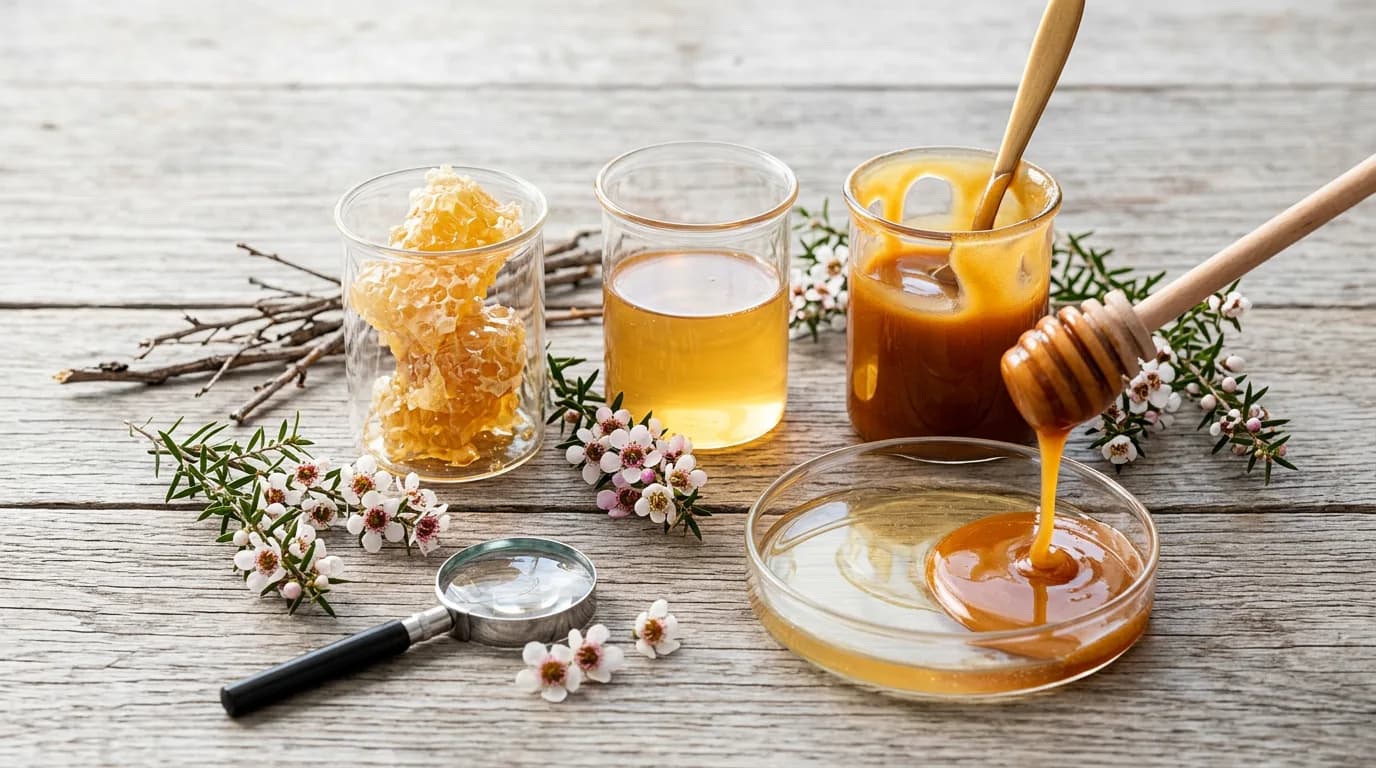
Dihydroxyacetone (DHA) is a small carbonyl sugar — chemically the simplest ketose — that exists in trace amounts across many biological systems and as a familiar ingredient in the cosmetics industry, where it is the active component in self-tanning products. In the Manuka honey context, DHA is interesting for a different reason: fresh Leptospermum scoparium nectar carries DHA at concentrations many times higher than ordinary nectar, and that high starting DHA is the chemical reason Manuka honey can accumulate measurable methylglyoxal (MGO) over time.
Unlike the antibacterial activity of many other honeys, which depends on hydrogen peroxide generated by glucose oxidase and is therefore fragile in the presence of heat, light, and catalase in body fluids, the non-peroxide activity in Manuka honey is built on the slow conversion of DHA to MGO. The chemistry is unusual, the time-course is slow, and understanding DHA is the most useful way to understand why a Manuka honey jar's MGO number is not static.
How it works
DHA in Manuka honey is not produced by the bee or by enzymatic processes in the hive. It is present in the nectar of L. scoparium before the bees arrive, at concentrations that are high enough to support meaningful downstream MGO accumulation. The high-DHA character of L. scoparium nectar is one of the genuinely distinctive features of the species relevant to honey chemistry, and it is the chemistry that ultimately underlies the non-peroxide antibacterial activity that distinguishes Manuka honey.
Once nectar is in the comb and the honey is being ripened — water is being driven off, sugars are concentrating — the DHA begins to convert to MGO through a non-enzymatic dehydration: a slow chemical loss of water that proceeds without enzymatic catalysis. Because the reaction is non-enzymatic, its rate depends on time and temperature rather than on the bee colony or on any specific microbial activity. Higher storage temperatures speed the conversion; lower temperatures slow it. The reaction is also not perfectly clean — some of the DHA will be consumed in side reactions that produce hydroxymethylfurfural (HMF) and other Maillard-related compounds, particularly at higher temperatures.
This is why a freshly harvested batch of Manuka honey, even from a high-DHA nectar source, does not start with its final MGO number. MGO levels rise over weeks and months as the conversion proceeds, eventually stabilising as DHA is consumed. A producer who measures DHA, MGO, and HMF together over time can therefore predict, with reasonable accuracy, the MGO trajectory of a given batch — and can manage storage conditions to maximise MGO development without driving HMF outside acceptable limits.
What the evidence shows
The DHA-to-MGO conversion in Manuka honey is well characterised in the published literature. The high-DHA nectar of L. scoparium, the non-enzymatic conversion mechanism, and the temperature-dependent kinetics are all established. Studies measuring DHA and MGO over storage time consistently show the trajectory described above: high initial DHA, gradual decline with corresponding MGO rise, eventual plateau as DHA is depleted.
The practical implication is well understood within the industry, even if it is not always communicated clearly to consumers: a Manuka honey jar's MGO number is the value at the time of testing, and a young, high-DHA batch may continue to develop. The certification systems and laboratory testing protocols used by accredited New Zealand laboratories account for this by reporting DHA and MGO together where appropriate.
What the DHA story does not support is using DHA concentration in isolation as a quality marker. DHA tells you something specific — about future MGO potential — and complements but does not replace the rest of the panel. Treating any single marker as a stand-alone quality signal is a misuse of the chemistry.
Practical use
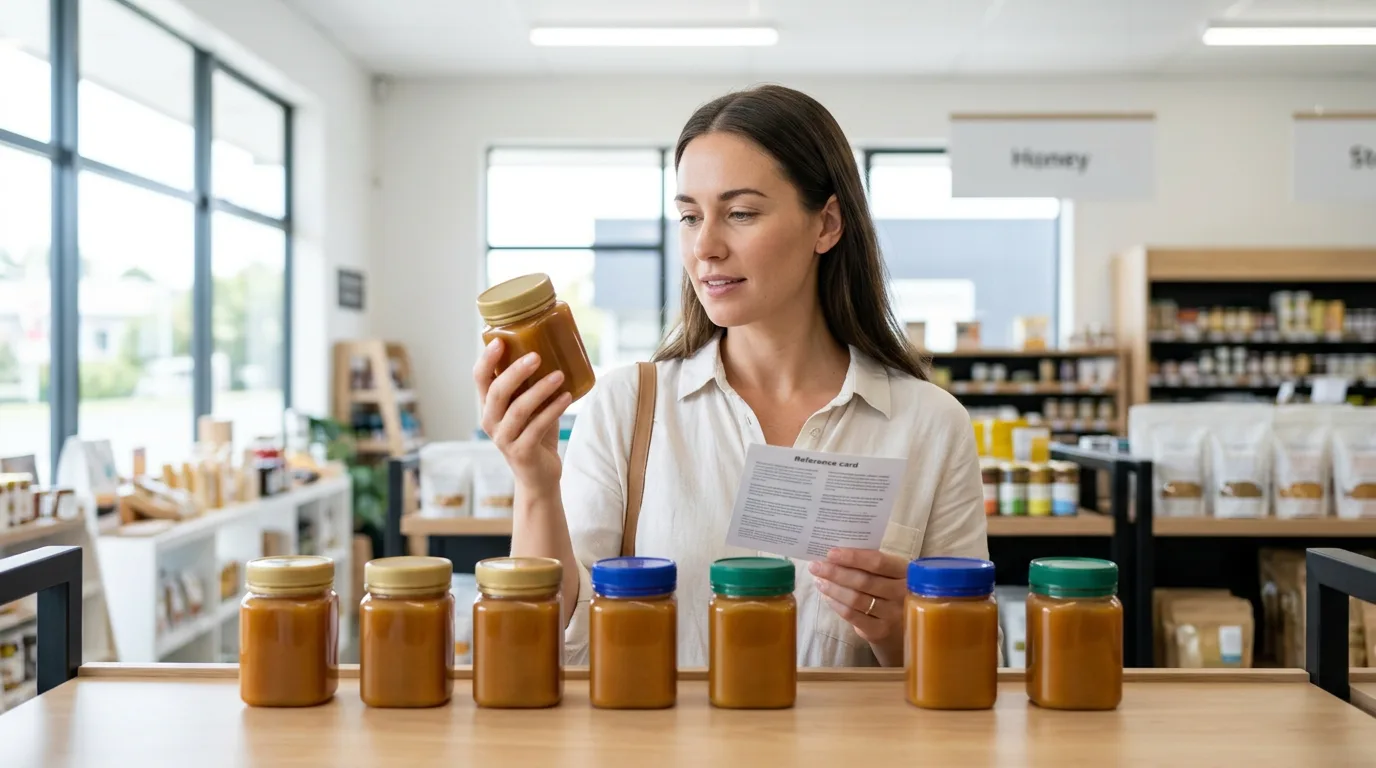
DHA does not usually appear on a retail label; consumers more commonly see MGO, UMF, or both. For most everyday purchases, the relevant numbers on the label are the MGO or UMF tier, ideally backed by an accredited laboratory test or a UMF licence number that can be checked against the UMF Honey Association register.
For producers, packers, and people working professionally in the supply chain, DHA is one of the markers monitored during ripening and storage to manage MGO development. The relationship between starting DHA, storage conditions, and final MGO is well understood enough that batches can be managed deliberately rather than by hope.
For everyone else, the useful takeaway is that the methylglyoxal page is the right entry point — DHA matters because it is where MGO comes from, and the UMF and MGO grading primer covers how the resulting potency is measured and graded for sale.
Limitations & cautions
DHA concentration in fresh honey is a *predictor* of future MGO development, not a proof of it. The conversion from DHA to MGO depends on time and storage temperature; honey stored cold will develop MGO more slowly, and honey held warm for too long will burn through DHA without proportionate MGO gain because of competing reactions that also raise hydroxymethylfurfural (HMF). Reading DHA in isolation without reference to MGO and HMF can therefore give a misleading picture of either current or future potency.
DHA is also a recognised target for adulteration: methylglyoxal can in principle be raised by spiking with DHA or with MGO directly, which is one reason botanical authenticity testing through leptosperin matters alongside the carbonyl markers. Treat DHA, MGO, HMF, and leptosperin as a panel — no single number on a label tells you what you need to know.
Frequently asked questions
What does DHA do?
Why is DHA reported alongside MGO?
Can DHA be added to honey artificially?
Does cold storage preserve DHA?
How does DHA compare across honey types?