Immunity
Manuka honey, immune cells, and resistance to everyday illness — separating mechanism from clinical evidence.
"Immunity" is one of the most heavily marketed claims in the natural-products category and one of the least precisely defined. The immune system is not a single dial that can be turned up or down — it is a layered response, ranging from physical barriers and innate defences to slower adaptive immunity, and different inputs influence different parts of it in different directions. "Boosting" all of it indiscriminately is neither possible nor desirable.
This hub collects what the evidence does and does not say about Manuka honey in this space, and where ordinary upper-respiratory illness leaves off and clinical immunocompromise begins.
What sits inside this cluster
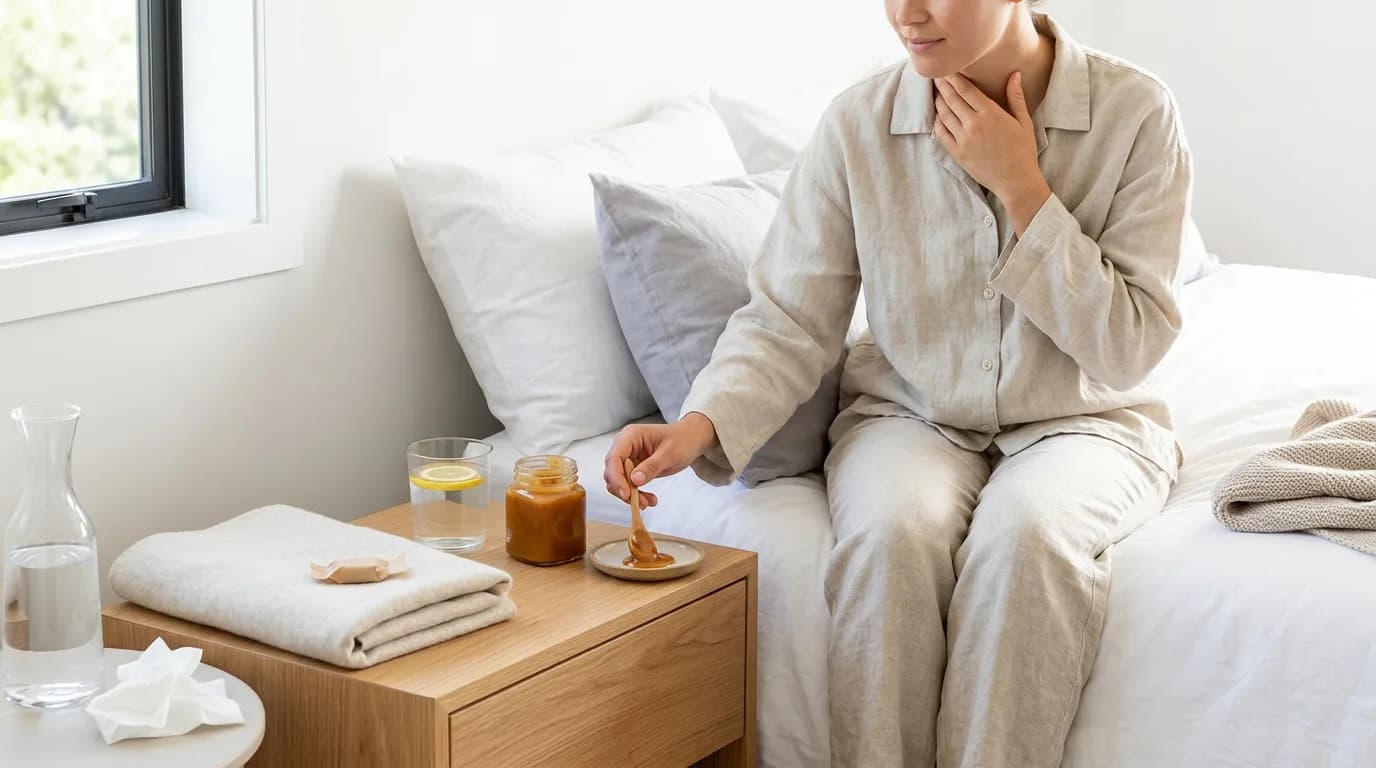
The everyday questions — does Manuka honey help with colds, does it prevent illness, what does laboratory work on immune cells actually show, what grade is appropriate — are covered on the immune support health topic page. The most clinically relevant immune-adjacent area is upper respiratory tract symptoms, particularly cough and throat irritation, which are covered in detail on the sore throat page and which sit on the strongest evidence base in this cluster (the Abuelgasim 2020 systematic review on honey for URTI symptoms). The compound chemistry that underlies the antibacterial part of the immune-adjacent argument is on the methylglyoxal (MGO) page.
The honest evidence summary across the cluster: honey can modestly reduce upper-respiratory symptoms — particularly cough — once an infection is underway, with effect sizes that are real but modest; mechanistic effects on immune cells (macrophage activation, cytokine signalling, antioxidant activity) are characterised in laboratory work but have not been shown to translate into reduced infection rates or improved clinical outcomes in humans; "immune boost" as a marketing claim runs well ahead of what the literature supports.
How this hub is meant to be used
For most healthy adults and children, Manuka honey is a reasonable food, sits comfortably alongside the rest of an ordinary diet, and offers some symptomatic help during routine upper-respiratory illness. The evidence-based path for staying healthy at the population level remains the unglamorous one — sleep, exercise, vaccination, hand hygiene, not smoking — and Manuka honey is not a substitute for any of those.
For people who are significantly immunocompromised — during cancer treatment, after organ transplantation, in primary immunodeficiency, or while on long-term immunosuppression — "immune support" is a clinical category and not a wellness one. Manuka honey is not the right tool, and the right guidance is the one their treating team gives them.
For symptoms beyond an ordinary cold — high or persistent fever, breathlessness, illness lasting more than a week or worsening rather than improving, or repeated unexplained infections — the right step is clinical assessment, not a higher grade of honey.