Reader story — Donna, the US. Health focus: healing a dog's wounds.
Understanding open wound healing after a serious dog attack
Dog-on-dog aggression is more common than many people realise, with more than 800,000 dog bites in the U.S. each year requiring medical attention, and countless pets among the victims. Severe bite wounds can tear through multiple layers of skin and tissue, sometimes leaving injuries that veterinarians cannot safely close right away with stitches due to swelling, contamination, or infection risk.
Sometimes the affected skin will die (known as necrosis) and has to be surgically removed, creating a large open wound. These exposed areas are constantly threatened by infection, flies, dirt, or the dog's own attempts to lick or chew at the wound. For owners, the daily burden of cleaning, bandaging, and caring for a painful, open wound is immense — both emotionally and financially.
Medical-grade Manuka honey is becoming increasingly recognised in veterinary medicine for its natural antibacterial properties and potential to support healthy tissue growth. It can help protect the wound, maintain the right healing moisture balance, and encourage recovery, providing owners with a natural option to complement veterinary care.
"The Manuka honey is what kept the wounds from getting infected. I believe that it truly helped save him." — Donna
Rocky's story
I adopted Rocky when he was about eight months old. He is five now. A couple of years ago, he survived emergency surgery for a twisted spleen, and I thought that would be the worst thing we would ever face. But then one afternoon, three large American Staffordshire terriers broke through the fence next door and attacked him in our yard.
I was not home at the time. I was having lunch with friends and came back to a nightmare. Rocky had deep, traumatic wounds across his leg, chest, and neck. At the emergency vet, they told me his size, at 112 pounds, was probably what saved him.
After the attack, part of the skin on his chest became necrotic from the trauma. The vet had to surgically remove the dead tissue, leaving a massive open wound that could not be closed right away because of infection risk.
Discovering an effective natural solution
"Our vet tech was extremely knowledgeable and said that Manuka honey would protect it from infection, and that's what it did."
The wound was so large I was terrified of infection. I knew I could not manage it alone. Thankfully, my friend, a vet tech with more than 20 years of experience, stepped in and suggested Manuka honey.
Another friend had used Manuka honey for her own health and told me how well it had worked. That gave me the confidence to order some for Rocky. I did some research and that is how I decided on a high-grade UMF™ 24+ Manuka honey.
Six weeks of daily care with UMF™ 24+
I took the first week off work to stay home with Rocky, but I was still afraid to change the dressings on my own. The wound was so large and raw. My vet tech friend came over every day for six weeks to help.
We gently cleaned the wound with an iodine and water solution, then applied a layer of the Manuka honey before bandaging. Later, Rocky's leg started swelling because the bandage was restricting circulation, so we left the wound uncovered. I continued applying a thin layer of honey every time he came back inside.
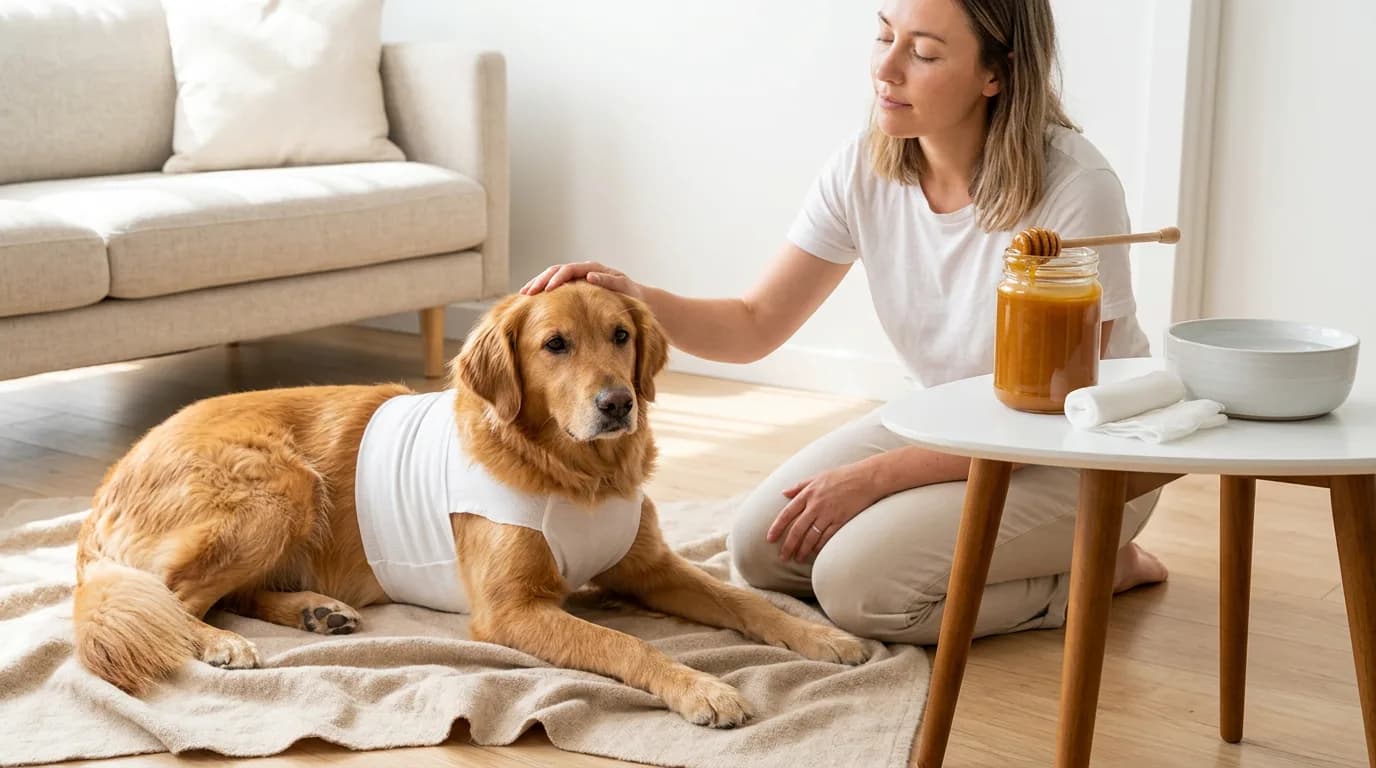
I even made a towel harness to help keep the wound protected from flies and dirt.
Weekly improvements with Manuka honey
Week by week the wound kept shrinking. From an area about twelve inches long, it is now down to around three inches. Eventually the vet added a few stitches to help the skin edges come together.
"It just kept shrinking and shrinking with the use of Manuka honey. I could not believe it."
My vet tech friend took pictures every day to show her colleagues, and they were shocked by how well it was healing. Using Manuka honey gave me peace of mind because I was so worried about infection or insects getting into the wound.
What I want every dog owner to know
Before this, I had never heard of honey being used on a dog wound. I truly believe the Manuka honey is what kept Rocky's wound from getting infected and let it heal. If I had not tried it, I do not know what we would have done.
"If Manuka honey can help somebody else, I just want them to know about it."
If your dog ever has a wound like this, talk to your vet about Manuka honey. It made me feel like I was doing everything possible for him.
Could Manuka honey help your dog's wound recovery?
Rocky suffered catastrophic wounds after a dog attack, leaving him with a large open area after necrotic skin was surgically removed. Through weeks of daily care with high-grade UMF™ 24+ Manuka honey, alongside veterinary support, Donna was able to protect the wound, keep bacteria away, and encourage healthy tissue growth. Over six weeks, the wound shrank dramatically and continued healing.
Donna used UMF™ 24+ Manuka honey, a high-grade option well suited to deep and serious dog wounds.
Manuka honey is not a replacement for seeking professional veterinary help. Always consult veterinary professionals in an emergency.
Names and some identifying details in this story have been changed to protect the privacy of the individuals involved.