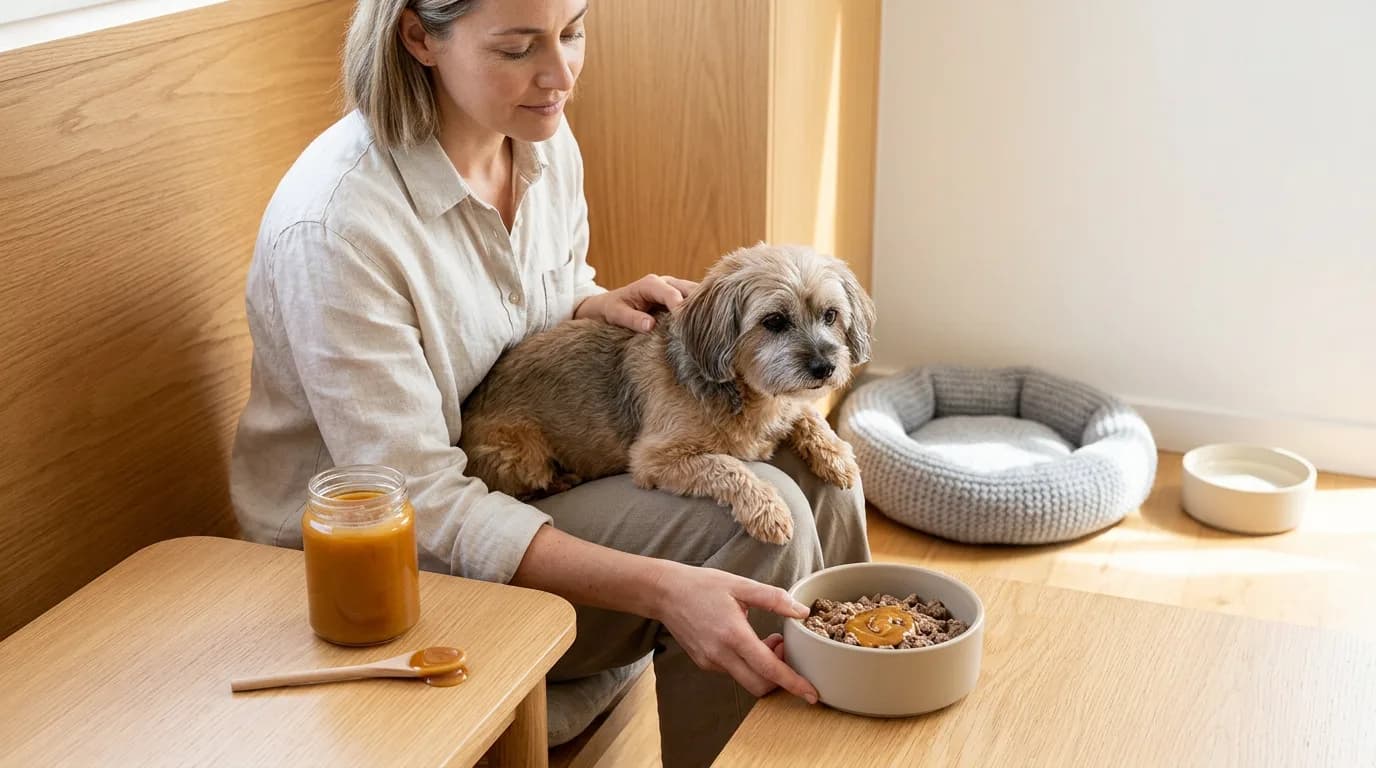
Reader story — Laura, the US. Health focus: her dog's chronic cough (tracheal collapse).
I'd tried everything the vet recommended to help my dog Bella's painful cough, but nothing worked — until Manuka honey. Now, she's coughing so much less, and I'm just grateful to have found something that finally brings her comfort.
— Laura
Tracheal and airway collapse in small dogs
- Canine tracheal collapse is a congenital disease that usually affects toy or miniature breeds of dogs. This means that the dogs are born with weak cartilage in the trachea, also known as the windpipe.
- This chronic condition causes mild to severe obstruction of the dog's airway that results in coughing and respiratory distress.
- The trachea is a flexible tube with sturdy C-shaped rings of cartilage that carries air from the nose and mouth to the airways in the lungs. These cartilages keep the windpipe open so air can enter and exit the lungs.
- Tracheal collapse occurs when these tracheal rings of cartilage weaken and collapse, resulting in a harsh, dry cough similar to the sound of a honking goose. Other symptoms include difficulty breathing, coughing when pressure is applied to the neck, vomiting or gagging, and wheezing.
- Symptoms seem to worsen when drinking water, with excitement or nervousness, and with excessively high or low temperatures.
When nothing else would help
Bella, my 15-year-old Yorkiepoo, has been battling tracheal collapse and esophagus issues since an emergency ACL surgery over a decade ago. During that procedure, the wrong size tube was used to intubate her, leaving her with a persistent, painful cough that has only worsened as she's aged. We've tried everything the vet recommended, from medications to treatments, but there's no cure for Bella's condition. And at her age, surgery isn't an option — I can't bear to see her sedated anymore.
As her coughing grew worse, especially at night, I was almost at that heartbreaking point of saying goodbye. Maybe it was time to let her go over the rainbow bridge. But in a final search for relief, I remembered hearing about the benefits of Manuka honey. I researched, read through reviews, and eventually settled on a high-grade UMF™ 20+ Manuka honey. I decided to try it, hoping it could bring Bella some comfort.
Bella's new daily dose of comfort
I started giving Bella about half a teaspoon of honey every morning, mixed into her wet food because she wouldn't take it directly. The honey is not as sweet as regular honey, but Bella accepted it easily with her meal. At first, I didn't notice a change, but after about a week, something wonderful happened: her hacking, honking cough that used to keep us up all night and continue all day long reduced dramatically. Suddenly, she was only coughing once or twice a day, and even then, the force was much gentler. I couldn't believe it — Bella was back to her lively, spunky self!
Manuka honey has given me more time with my precious fur baby, and I'm endlessly grateful for that.
— Laura
I've continued giving Bella Manuka honey daily. I could probably find cheaper honey, but I know I'm getting pure, high-quality Manuka honey, and that quality and reliability are worth it for Bella. It's done for Bella what nothing else could.
If you're considering Manuka honey for a similar reason, I'd say don't hesitate — you might be just as astonished as I am with the results.
Manuka honey is not recommended as a replacement for seeking professional veterinary help. Always consult veterinary professionals in an emergency.
Names and some identifying details in this story have been changed to protect the privacy of the individuals involved.