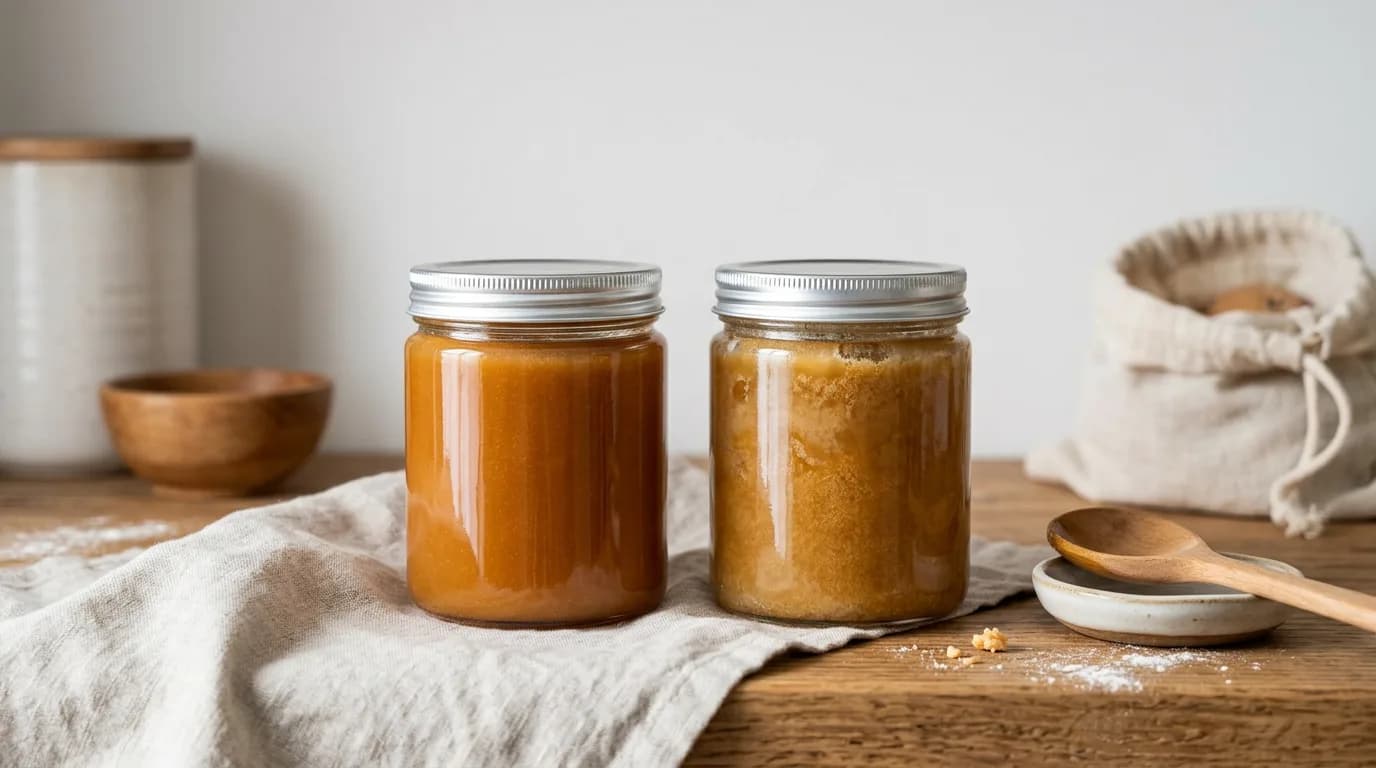
Manuka honey is one of the longest-lasting foods in the pantry: kept sealed, a jar stays good to eat for years, often well past its printed date. Honey's very low water content and high sugar concentration make it a hostile environment for most microorganisms, which is part of why honey has long been considered a shelf-stable food.
Why a 'Best Before' Date Doesn't Mean What You Think
That printed date on the label is easy to misread as a safety deadline, but it isn't functioning the same way it does on, say, a carton of milk. A 'best before' date on honey is a quality indicator set by the producer, not a strict safety cut-off the way it is for perishable foods. It signals a point after which flavour, colour, or texture may start to drift from the honey's freshest state — not a point at which the jar becomes unsafe to eat.
Crystallisation Isn't a Sign of Spoilage
One of the most common reasons people assume their manuka honey has "gone off" is a change in texture. Crystallisation (turning cloudy, grainy, or solid) is a natural physical change in honey over time and does not by itself mean the honey has spoiled. A crystallised jar is still perfectly good to eat.
How Storage Affects Manuka Honey Over Time
What actually puts a jar at risk of going off has more to do with how it's stored than how long it's been sitting in the cupboard. Manuka honey, like other honeys, is naturally hygroscopic, meaning it can absorb moisture from the air if left uncovered, which can affect texture and, over long periods, encourage fermentation. That's essentially the one way honey's naturally inhospitable, low-water environment can be undermined. Storing manuka honey in a sealed jar, away from direct heat and sunlight, may help preserve its texture and colour over time.
Signs a Jar Should Actually Be Discarded
Genuine spoilage in honey is rare, but it isn't impossible, and it's worth knowing what it looks like. If honey develops an off smell, visible mould, or fermentation bubbles — signs that are uncommon in honey — it is generally advisable to discard it. Outside of these specific signs, changes such as darkening or crystallisation are considered normal and are not, by themselves, reasons for concern.
What Manuka Honey Research Covers
Manuka honey research has focused on its composition and on what happens when people eat it, rather than on shelf life. A small clinical trial in healthy adults found that daily consumption of UMF 20+ manuka honey for four weeks did not trigger allergy-related immune markers or measurably change gut bacterial populations — a reassuring finding for regular eating, though a separate question from how honey holds up in the jar.
Choosing and Storing Genuine Manuka Honey
Genuine manuka honey is typically sold with a UMF or MGO rating and batch information on the label, which buyers can use to help distinguish it from lower-grade or mislabelled products. Checking this information at purchase gives a reasonable starting point; from there, ordinary storage practice — a sealed jar kept cool and out of direct light — is what best protects the honey's quality over months and years.
For most households, the practical takeaway is straightforward: a jar of manuka honey kept sealed and away from heat and light will typically outlast its printed date by a wide margin, and a change in colour, texture, or crystallisation on its own is not a reason to throw it away.
References
- (2010). Demonstrating the safety of manuka honey UMF 20+in a human clinical trial with healthy individuals. The British journal of nutrition. doi:10.1017/s0007114509992777