Background
Most people encounter manuka honey in a jar, spread on toast or stirred into tea. But a separate strand of research — materials science and bioengineering, not food science — has spent the last several years asking a different question: can manuka honey be built into powders, fibers, and gels designed specifically for wound care? This article summarizes where that research currently stands. It's genuinely promising early-stage work, but it's important to be precise about what "early-stage" means here: these are laboratory and animal-model findings, not products you can buy, and not treatments a clinician would currently recommend.
Powder-Based Delivery Systems
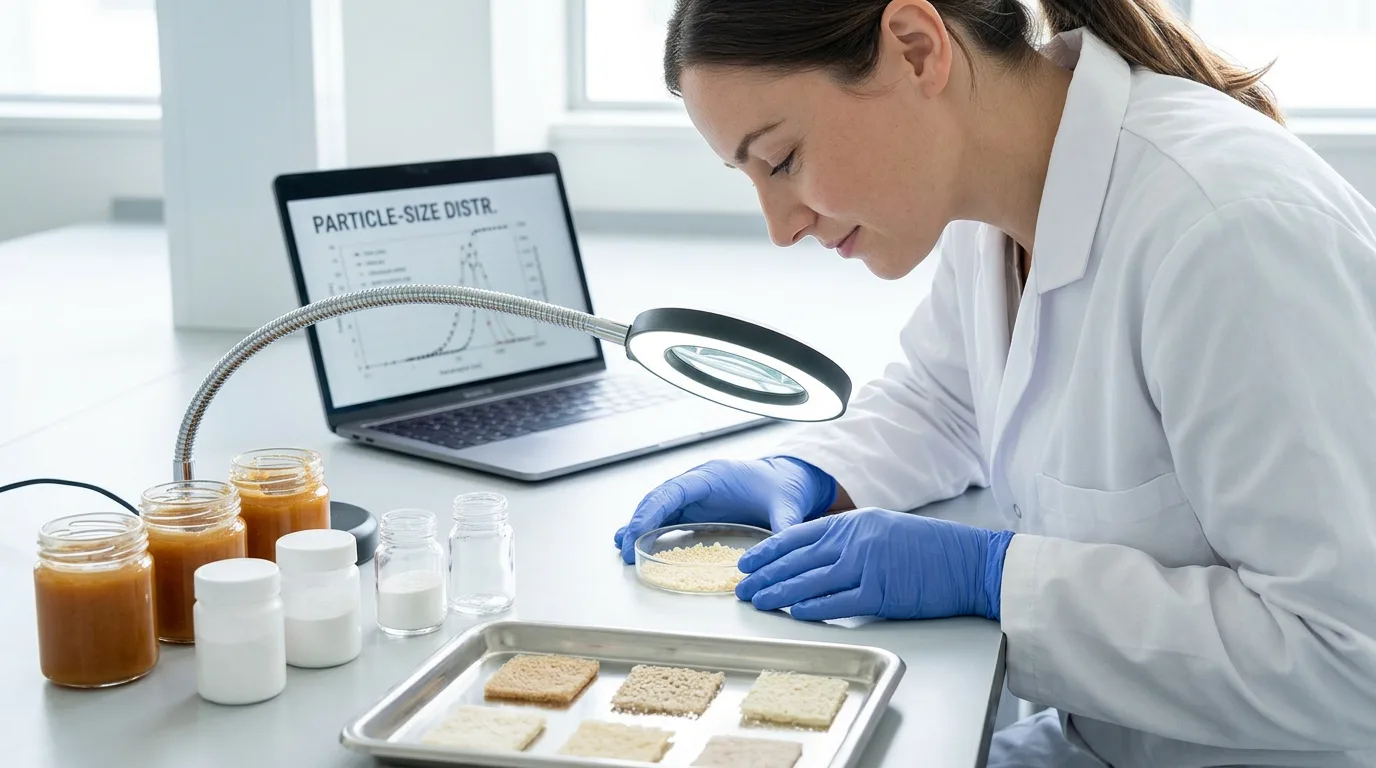
One strand of this work has focused on microparticles — tiny, engineered particles made from pectin and chitosan — designed to carry manuka honey fractions for controlled delivery to chronic wounds. Laboratory formulation work has produced these particles loaded with two different honey fractions (one rich in methylglyoxal, one rich in polyphenols), and researchers have characterized their particle size, hydration behavior, and mechanical stability [1]. This is an early-stage powder-delivery concept, not a marketed product, and it's worth being clear that this is medical-grade research material, distinct from the food-grade manuka honey sold for dietary use.
The more interesting findings come from testing what these particles actually do biologically. In one preclinical study, the methylglyoxal-rich particles increased fibroblast proliferation in cell culture — fibroblasts being the cells responsible for laying down new tissue during wound repair. Combined with platelet lysate, the honey-loaded particles also accelerated wound closure in a rat excision model [1]. This is genuinely encouraging as a signal, but it remains preliminary animal-model evidence. It hasn't been confirmed in human wound-care trials, and it shouldn't be read as treatment guidance for any wound.
Fiber and Gel Scaffolds
A second, related line of research has explored spinning manuka honey directly into fibrous or gel-like scaffolds — materials designed to sit on a wound the way a dressing would, but engineered at a microscopic level. Bench studies incorporating manuka honey into electrospun silk-fibroin fiber mats and cryogels found that both scaffold types retained antibacterial clearance against test bacteria in vitro, with the electrospun fiber mats producing larger clearance zones than the cryogels. Notably, the UMF grade of the honey used didn't significantly change this effect [2]. These remain laboratory materials-science findings — not tested on human wounds — and refer to experimental medical-grade constructs rather than consumer honey products.
Separately, cytotoxicity testing on these same scaffolds found that pore structure (roughly 10 micrometres in the electrospun mats versus 51–60 micrometres in the cryogels) and honey loading did not push cell counts below a defined viability threshold, regardless of UMF grade [2]. That's a reassuring signal for biocompatibility at the cell-culture level, but it has not been evaluated in animal or human wound tissue, and it is not evidence of safety or efficacy for actual wound treatment.
A third formulation approach used chitosan-gelatin cryogels and hydrogels doped with manuka honey at concentrations between 1% and 10%. Increasing honey content changed the physical structure of these scaffolds — reducing pore size and swelling capacity — and improved clearance of Gram-positive bacteria at a moderate 5% loading. However, higher honey concentrations reduced cultured cell viability [3]. This is a useful early materials-optimization finding for future dressing design, but it is not a tested clinical product, and the concentrations studied should not be read as dosing guidance of any kind.
Why Methylglyoxal Still Anchors the Story
Across all of these formats — powders, fibers, gels — the working assumption is that antibacterial activity traces back to methylglyoxal, the compound already well established as the dominant antibacterial constituent of manuka honey in solution form [4]. That prior chemistry work is solid and well characterized. It's reasonable to expect that MGO retained within a powder or fiber format would behave similarly. But direct confirmation of that mechanism within these specific new delivery formats remains limited — researchers are largely extrapolating from what's known about honey in solution, not yet proving it fresh in every new material.
Where This Fits in the Bigger Picture
A 2024 review of manuka honey research places this bioengineering work in context: alongside more familiar nutritional and cosmetic applications, tissue-scaffold and delivery-system research is flagged as an emerging area of product development, driven partly by competition in the manuka honey market [5]. That framing is useful — it's a summary of where the research field is heading, not new experimental data in itself, and no products of this kind are yet established in mainstream retail. If you're tracking manuka honey innovation, this is a space worth watching rather than a shelf you'll find stocked any time soon.
References
- (2016). Particulate systems based on pectin/chitosan association for the delivery of manuka honey components and platelet lysate in chronic skin ulcers. International journal of pharmaceutics. doi:10.1016/j.ijpharm.2016.05.035
- (2017). A Comparison of Tissue Engineering Scaffolds Incorporated with Manuka Honey of Varying UMF. BioMed research international. doi:10.1155/2017/4843065
- (2023). Antibacterial Efficacy of Manuka Honey-Doped Chitosan-Gelatin Cryogel and Hydrogel Scaffolds in Reducing Infection. Gels (Basel, Switzerland). doi:10.3390/gels9110877
- (2024). An updated review of functional ingredients of Manuka honey and their value-added innovations. Food chemistry. doi:10.1016/j.foodchem.2023.138060
- (2008). Identification and quantification of methylglyoxal as the dominant antibacterial constituent of Manuka (Leptospermum scoparium) honeys from New Zealand. Molecular Nutrition & Food Research. doi:10.1002/mnfr.200700282