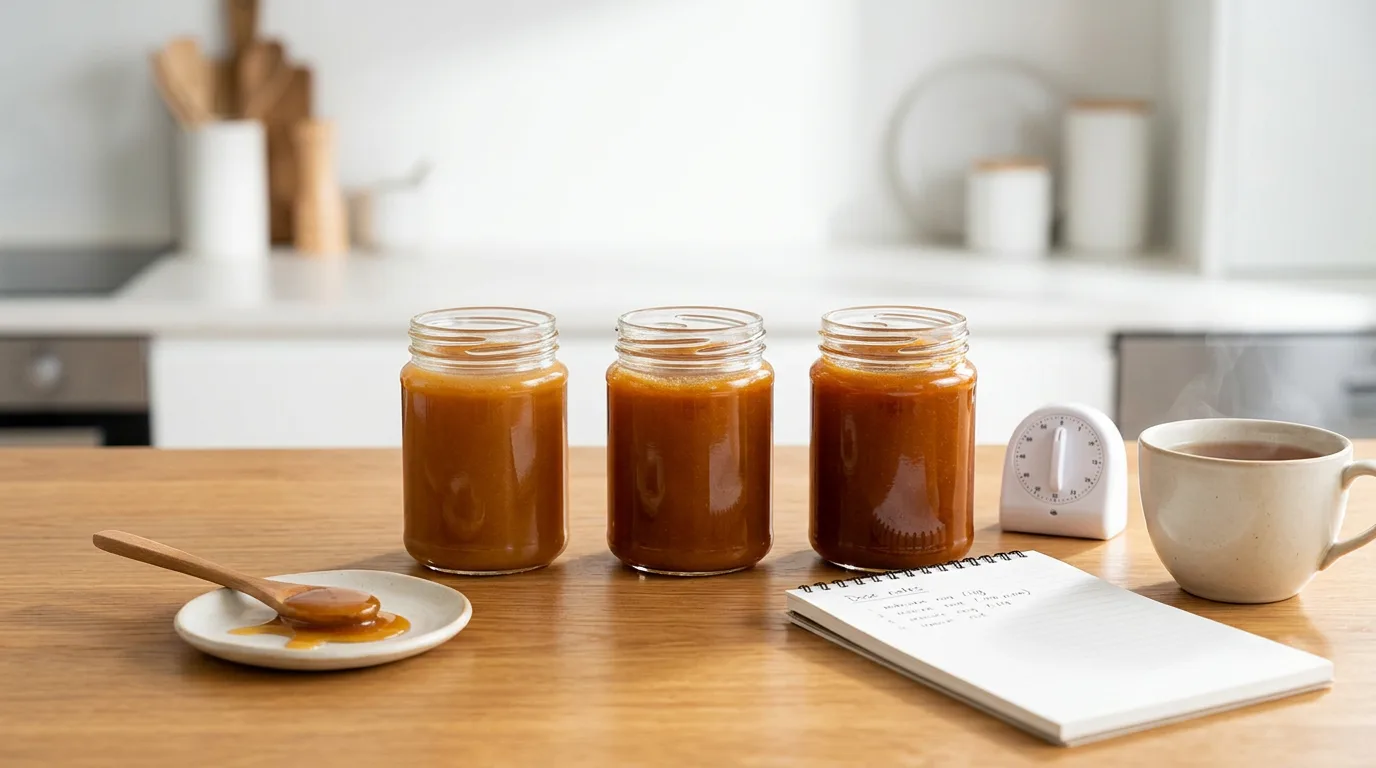
If you've just taken the quiz and have a grade in mind, this guide covers the practical questions that come up next: what the rating systems actually mean, how much honey to take, when to take it, and the few mistakes that quietly undermine most people's results.
What UMF and MGO actually mean
Two rating systems, both widely used:
- MGO measures methylglyoxal — the compound that drives Manuka's antibacterial activity. Higher MGO means stronger activity.
- UMF is a broader certification: it includes MGO plus markers that confirm the honey is genuinely Manuka (DHA and leptosperin) and meets the UMF programme's authenticity standards.
You can convert between the two — UMF 10+ corresponds to MGO 263+, UMF 15+ to MGO 514+, UMF 20+ to MGO 829+, and so on. UMF is harder to fake; MGO is what the science measures most directly. Either is fine if it's from a reputable source.
How much to take
For most people, 1–2 teaspoons per day is the working amount. There's no benefit to dramatically more — the active compound concentrations are what matter, not the volume.
- General wellness: 1 teaspoon, once a day, any time.
- Sore throat or cold: 1 teaspoon, two or three times a day, slowly off the spoon so it coats the throat.
- Digestive support: 1 teaspoon, taken about 20 minutes before meals on an empty stomach. The standard clinical-trial protocol uses three doses per day.
- Topical: apply directly to the area; cover with a clean dressing if you're treating a small cut or burn. (Chronic or post-surgical wounds need sterilized medical-grade products, not eating-grade honey.)
When to step up grades
Most people start with UMF 10+ or UMF 15+ and are well-served. You step up when:
- Symptoms are persistent rather than occasional.
- You're using it for a specific condition where higher MGO is the standard recommendation (gastritis, H. pylori, chronic skin conditions).
- You've been on a lower grade and aren't getting the effect you wanted — but give a trial at least 2–4 weeks at the lower grade first.
You don't always need to step up. UMF 5+ is a perfectly fine sweetener; UMF 28+ is overkill for most uses and has a much sharper, more medicinal flavour.
The mistakes that quietly undermine results
- Cooking with it. Heat above about 40°C degrades MGO. Stir into warm tea, never boiling water. Bake with it only if you don't care about the active compound (you'll get the flavour but not the activity).
- Taking it with food when you wanted gut effect. For digestive use, empty stomach matters — food dilutes the contact time with the stomach lining.
- Expecting overnight effect. For wellness or symptom support, give it a real trial — 2–4 weeks of consistent use is a fair test.
- Buying without a rating. "Manuka" on the label without a UMF or MGO number is a marketing claim, not a quality measure.
Who shouldn't take it
- Infants under 12 months. Like all honey, Manuka carries a small risk of infant botulism. Never give honey to a baby under 1.
- People with diabetes or blood-sugar concerns should treat it like any other sugar source and discuss it with their clinician.
- People who are pregnant or breastfeeding — generally safe but talk to your clinician before adding anything new to your routine.
Where the science is solid, and where it's still emerging
The strongest evidence is for wound care (with medical-grade products) and antibacterial activity in lab studies, including against H. pylori. Evidence for digestive conditions in humans is encouraging but mostly small trials and traditional use. Skin conditions like eczema and acne have positive case reports and small studies, with larger trials still needed. Daily wellness claims are less rigorously studied — the best honest framing is that it's a high-quality honey with measurable antibacterial activity, used as part of a broader routine.
If you want to dig in further, browse the research archive or the grade pages for the specific grade your quiz recommended.
Manuka Clinic is editorial. This guide is not medical advice. If you're managing a specific condition, talk to your clinician about whether and how to incorporate Manuka into your routine.